

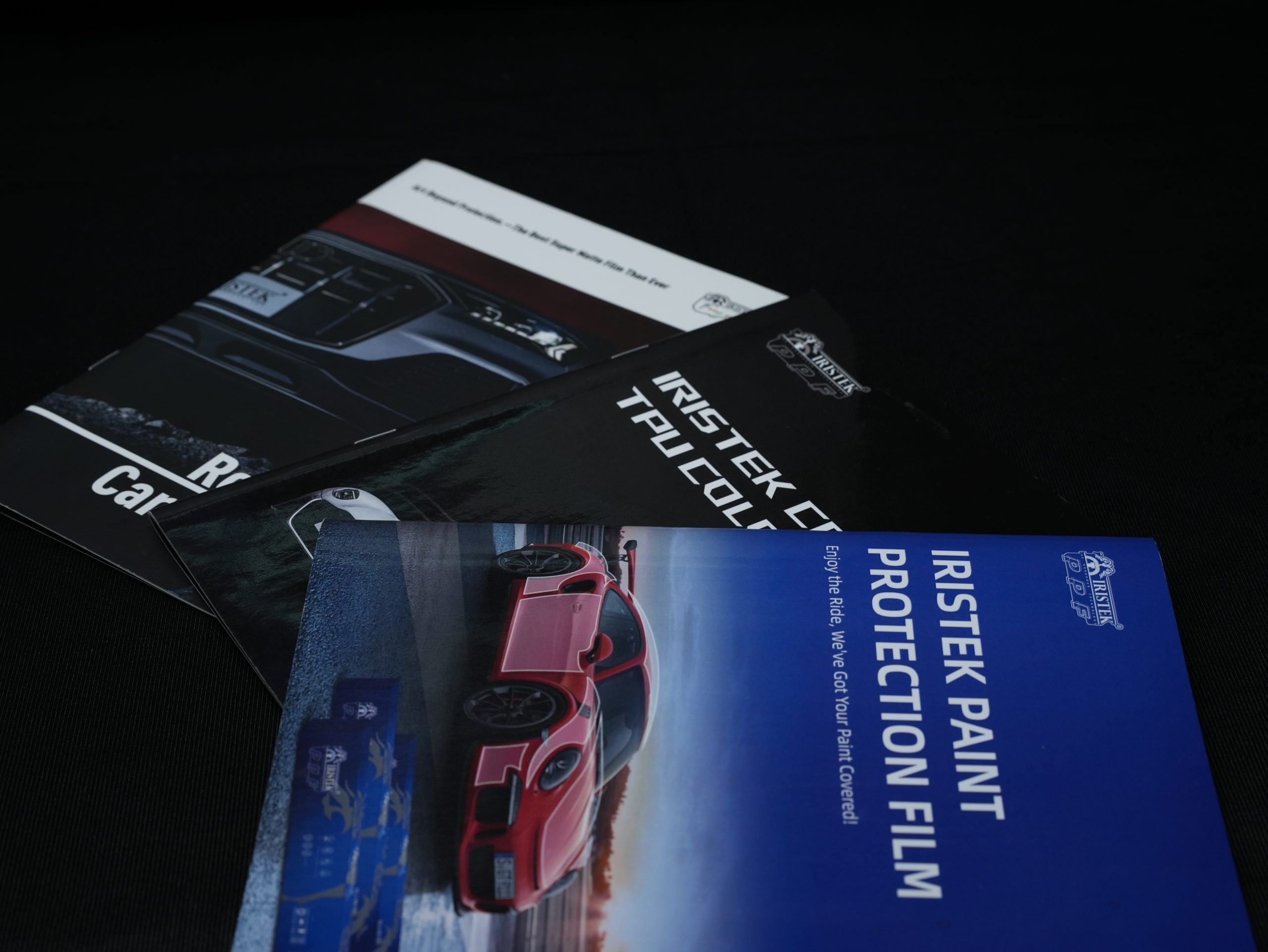
Six Key Performance Tests for Paint Protection Film(PPF)
Many people say a good PPF is like a “hexagon warrior” —[‘heksəg(ə)n], meaning every performance needs to be balanced.
But when customers ask:
“Why is your PPF better than others?”
It can be difficult to explain clearly.
In fact, a professional Paint Protection Film is judged by six key performances: Anti-stain, Gloss, Adhesion, Corrosion Resistance, Self-Healing, and Weather Resistance.
1. Anti-Stain Test
First is the anti-stain test.
This simulates common contaminants such as: bird droppings, insect residue, tree sap…
We apply marker ink on the film surface, heat it to 65°C, and leave it for 24 hours. Then we clean it with alcohol.
The performance is evaluated based on:
Whether it can be fully removed
Whether there is staining left on the surface.
2. Corrosion Resistance Test
The second test is corrosion resistance.
It simulates: acid rain, water spots, chemical contamination…
We drop PH 4.5 dilute sulfuric acid [daɪ’l(j)uːt; dɪ-] [sʌl’fjʊərɪk] and 0.5WT% phosphoric acid solution on the film.
Then heat it to 75°C for 30 minutes.
After cleaning with water and alcohol, we check: corrosion marks, whitening, gloss reduction.
3. Gloss Test
The third test is gloss measurement.
PPF not only protects the paint, but also enhances the visual gloss of the vehicle.
Using a gloss meter, we compare: original paint, surface after applying PPF.
High-quality TPU PPF can increase gloss by 10%-30%.
4. Adhesion Test
The fourth test is adhesion strength.
The adhesive system determines: installation stability, edge lifting risk, residue during removal.
We usually test it with a 180-degree peel test.
A good PPF should stick firmly but remove cleanly.
5. Self-Healing Test
The fifth test is self-healing capability.
TPU films can recover from light scratches with heat or sunlight.
We create light scratches using steel wool or sharp tools, then apply: hot water, heat gun, or sunlight to observe how quickly the surface recovers.
6. Weather Resistance Test
The final test is weather resistance.
PPF is designed to last more than 5 years, so it must resist UV exposure and aging.
Using UV aging test equipment, we simulate long-term sunlight exposure.
Then we evaluate: yellowing, brittleness, gloss reduction
So a truly high-quality PPF is not defined by just one performance.
It needs to be balanced in all six aspects:
Anti-stain, Gloss, Adhesion, Corrosion Resistance, Self-Healing, and Weather Resistance.
Only then can it protect the paint long-term and maintain the vehicle’s appearance.